Energy Grid News

Search
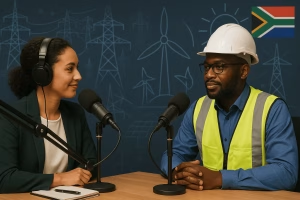
A South African podcast interview in a professional studio featuring a Black male electrical grid engineer in a high-visibility vest and hard hat, and a South African female interviewer in business attire with headphones and a microphone. Background includes energy-themed illustrations and the South African flag, representing a discussion on grid compliance and renewable energy in South Africa.

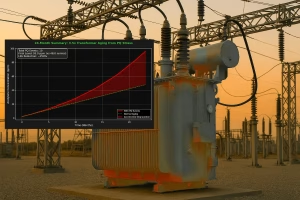
Transformer Monitoring Breakthrough: Why Traditional Methods Miss Critical Failures

Tune in to discover how you can preempt catastrophic transformer failures. We expose how unseen electrical stresses undermine traditional monitoring methods, leading to costly surprises. Learn how advanced power quality monitoring can provide early warnings, enabling strategic asset management and substantial cost savings. This episode explores South African research revealing the hidden factors impacting transformer lifespan and grid reliability.

Read More »
VECTO System - Power engineers monitoring Sub-Synchronous Control Interactions in an electrical sub-station.

Tackling Sub-Synchronous Control Interactions: Ensuring Grid Stability in the Era of Renewable Energy Integration

This article delves into SSCI impact on frequency stability, compliance, and the risk of operational curtailment due to power quality. As renewable energy resources expand, inverter-connected installations like Utility-Scale Wind Power Sites and Commercial Solar Energy Infrastructure bring a risk of sub-synchronous control interactions (SSCI). These low-frequency oscillations, arising from interactions between inverters and compensating devices, challenge grid stability and asset lifespan.

Read More »
Harmonic impedance scanning is a powerful analytical technique used in electrical power systems to evaluate system behavior across a range of frequencies. This method is particularly useful for identifying resonance conditions and assessing the impact of harmonics on the quality of supply (Power Quality (PQ)).

Harmonic Impedance Scanning

Harmonic impedance scanning is a powerful analytical technique used in electrical power systems to evaluate system behavior across a range of frequencies. This method is particularly useful for identifying resonance conditions and assessing the impact of harmonics on the quality of supply (Power Quality (PQ)).

Read More »
Examples of real-world WMU installations in Riverside, California: (left): 3-phase 12.47 kV installation at a substation; (top-right): 3-phase 480 V installation at a PV inverter; (bottom- right): single-phase 120 V installation at a power outlet.

Synchro-Waveforms: The Future of Power Systems Data Analytics

The Synchro-Waveform (a.k.a. synchronous waveforms) paper by Hamed Mohsenian-Rad and Wilsun Xu, both IEEE Fellows shows how synchro-waveform monitoring is a useful tool for power engineers. It discusses the latest developments in synchro waveform technology, power system stability, and energy economy. This paper goes over the basics of synchro waveform analysis, real-time power system monitoring, and techniques for synchronising large-scale power networks.

Read More »

Puerto Rico as a warning to power grid operators

Rooftop solar is already South Australia’s largest electricity generator with about 1300 megawatts of capacity involving one in every three homes. A full picture of the grid, as it stands, is the precursor to a successful transition to a resilient, distributed grid architecture. Policy makers need to give engineers the data they need if they are to expect a successful transition.

Read More »

More renewables, less gas: South Australia turns energy debate upside down

Rooftop solar is already South Australia’s largest electricity generator with about 1300 megawatts of capacity involving one in every three homes. A full picture of the grid, as it stands, is the precursor to a successful transition to a resilient, distributed grid architecture. Policy makers need to give engineers the data they need if they are to expect a successful transition.

Read More »

Renewable energy to replace coal in WA’s biggest power grid as solar hollows market, report predicts

Rooftop solar is already South Australia’s largest electricity generator with about 1300 megawatts of capacity involving one in every three homes. A full picture of the grid, as it stands, is the precursor to a successful transition to a resilient, distributed grid architecture. Policy makers need to give engineers the data they need if they are to expect a successful transition.

Read More »
Wildfires caused by electrical transmission lines arcing to earth.

Power Grids Aren’t Evolving Fast Enough for Global Warming

Rooftop solar is already South Australia’s largest electricity generator with about 1300 megawatts of capacity involving one in every three homes. A full picture of the grid, as it stands, is the precursor to a successful transition to a resilient, distributed grid architecture. Policy makers need to give engineers the data they need if they are to expect a successful transition.

Read More »

Combating fraud and theft in the smart grid

Rooftop solar is already South Australia’s largest electricity generator with about 1300 megawatts of capacity involving one in every three homes. A full picture of the grid, as it stands, is the precursor to a successful transition to a resilient, distributed grid architecture. Policy makers need to give engineers the data they need if they are to expect a successful transition.

Read More »

Grid strife threatens Australia’s green power switch, investors say

Rooftop solar is already South Australia’s largest electricity generator with about 1300 megawatts of capacity involving one in every three homes. A full picture of the grid, as it stands, is the precursor to a successful transition to a resilient, distributed grid architecture. Policy makers need to give engineers the data they need if they are to expect a successful transition.

Read More »

Electric Grid Stability Assailed by Growing Challenges

Rooftop solar is already South Australia’s largest electricity generator with about 1300 megawatts of capacity involving one in every three homes. A full picture of the grid, as it stands, is the precursor to a successful transition to a resilient, distributed grid architecture. Policy makers need to give engineers the data they need if they are to expect a successful transition.

Read More »
Wildfires caused by electrical transmission lines arcing to earth.

PG&E exits 18-month bankruptcy and pays $5.4B to California wildfire victims

Rooftop solar is already South Australia’s largest electricity generator with about 1300 megawatts of capacity involving one in every three homes. A full picture of the grid, as it stands, is the precursor to a successful transition to a resilient, distributed grid architecture. Policy makers need to give engineers the data they need if they are to expect a successful transition.

Read More »